
Symptoms of Low Estrogen: 20+ Signs Your Body Is Trying to Tell You Something
Estrogen is one of the most powerful hormones in the female body. It doesn’t just control your period. It shapes your mood, your bones, your brain, your skin, your sleep, and even your heart.
When estrogen drops — whether from perimenopause, stress, an eating disorder, or a medical condition — the symptoms can show up everywhere at once, in ways that feel completely unrelated.
That’s exactly why so many women spend years getting misdiagnosed or dismissed.
This guide covers every symptom of low estrogen — the classic signs, the hidden ones, and the ones nobody talks about — so you can finally connect the dots.
What Is Low Estrogen?
Estrogen is produced mainly in your ovaries, with smaller amounts from your adrenal glands and fat cells. It plays a central role in:
- Regulating your menstrual cycle
- Maintaining bone density
- Supporting brain function and mood
- Protecting your heart and blood vessels
- Keeping vaginal and urinary tissue healthy
- Controlling body temperature
- Regulating metabolism and body weight
Estrogen naturally rises and falls throughout the month. That’s normal. What’s not normal is when estrogen stays consistently low — or when it begins a long, erratic decline, as happens in perimenopause.
What Causes Low Estrogen?
Low estrogen is most commonly linked to the natural aging process, but it can happen at any age. Common causes include:
Age-related causes:
- Perimenopause (typically begins in the mid-40s)
- Menopause (12 consecutive months without a period)
- Postmenopause
Medical and lifestyle causes:
- Eating disorders like anorexia or bulimia
- Excessive exercise (athletic amenorrhea)
- Primary ovarian insufficiency (before age 40)
- Removal of the ovaries (surgical menopause)
- Cancer treatments including chemotherapy and radiation
- Autoimmune diseases that attack the ovaries
- Turner syndrome or Fragile X syndrome
- Chronic stress (high cortisol suppresses estrogen)
- Extreme weight loss or very low body fat
The Most Common Symptoms of Low Estrogen
1. Irregular or Absent Periods
This is usually the first sign women notice. Your cycle may become shorter, longer, heavier, lighter, or completely unpredictable. Some months you may skip a period entirely.
This happens because estrogen is responsible for building up the uterine lining. Without enough of it, your cycle loses its rhythm.
2. Hot Flashes
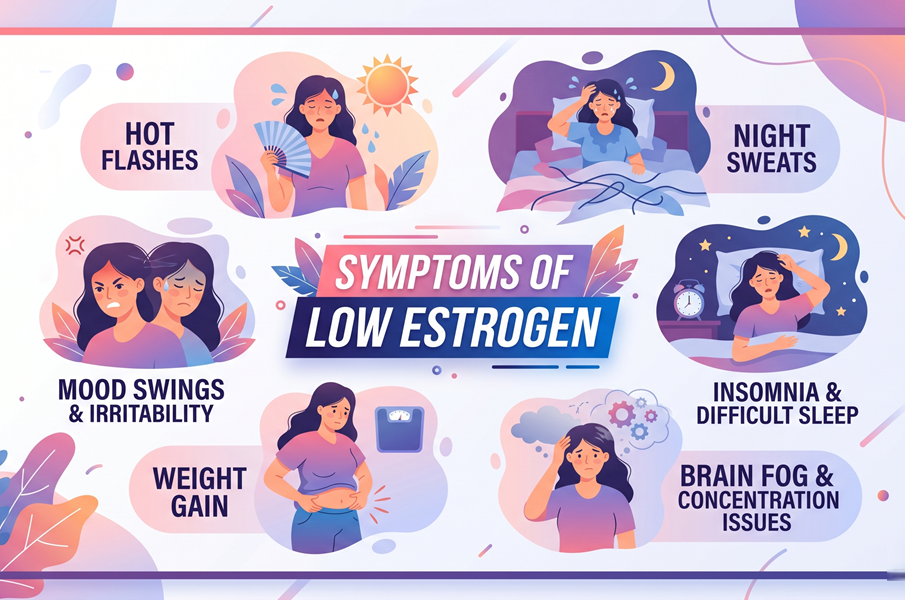
Hot flashes are sudden, intense waves of heat — often spreading across your chest, neck, and face. They can last anywhere from 30 seconds to 10 minutes and may be followed by chills.
They happen because low estrogen disrupts your body’s internal thermostat in the hypothalamus. Research shows that vasomotor symptoms (hot flashes and night sweats) can persist for 7 years on average after entering menopause — and in 1 in 7 women, they can last 15+ years.
3. Night Sweats
Night sweats are essentially hot flashes that happen during sleep. They can drench your sheets and wake you up repeatedly, making restful sleep nearly impossible.
4. Vaginal Dryness and Discomfort
As estrogen drops, vaginal tissue becomes thinner, drier, and less elastic — a condition called vaginal atrophy or genitourinary syndrome of menopause (GSM). This can cause:
- Pain or burning during sex
- Itching or irritation of the vulva
- Increased susceptibility to vaginal infections
- Discomfort wearing certain clothing
- Burning after urination
This is one of the few symptoms that tends to worsen after menopause rather than improve.
5. Sleep Problems and Insomnia
Low estrogen affects the part of the brain that controls your sleep-wake cycle. Combined with night sweats, this creates a brutal cycle:
- Night sweats wake you up repeatedly
- Sleep deprivation leads to fatigue, brain fog, and weight gain
- Poor sleep worsens mood and increases cortisol
- High cortisol further disrupts estrogen
6. Mood Changes: Anxiety, Irritability, and Depression
Estrogen regulates serotonin, dopamine, and GABA — all neurotransmitters that directly control your mood. When estrogen fluctuates or drops, these “feel-good” chemicals drop with it.
Women are more likely to experience depression during perimenopause than at any other time in their adult lives. Studies show some women experience a “window of vulnerability” to hormone shifts that significantly raises their risk.
7. Brain Fog and Memory Issues
Can’t find the right word? Forgetting things mid-sentence? Walking into a room and forgetting why?
Estrogen supports healthy blood flow to the brain and helps maintain serotonin and dopamine levels — both essential for memory and focus. When estrogen falls, cognitive performance can dip noticeably.
Research shows estrogen receptors exist throughout the brain. Brain fog tends to resolve for most women after the transition to menopause is complete.
8. Weight Gain (Especially Belly Fat)
Women gain an average of 1 to 1.5 pounds per year during the menopause transition. Low estrogen contributes to this by:
- Slowing metabolism
- Shifting fat storage from hips to the abdomen
- Increasing cortisol, which promotes belly fat
- Disrupting insulin sensitivity
- Increasing appetite and cravings (estradiol helps regulate hunger)
9. Low Sex Drive (Low Libido)
Estrogen plays a key role in sexual desire and arousal. When levels drop, many women notice significantly reduced interest in sex — which can be compounded by vaginal discomfort making sex painful.
10. Bone Loss and Increased Fracture Risk
Estrogen protects your bones by slowing the activity of osteoclasts — cells that break down bone. When estrogen drops, bone loss accelerates.
This is why postmenopausal women are at significantly higher risk for osteoporosis and fractures, particularly in the spine, hips, and wrists. Bone loss can begin years before menopause is even reached.
Lesser-Known (But Very Real) Symptoms of Low Estrogen
Many women are shocked to discover how wide-ranging the effects of low estrogen can be. Here are the symptoms most commonly missed:
11. Joint Pain and Stiffness
Up to 60% of women experience joint aches during the menopause transition, according to the National Menopause Foundation. Many mistake this for arthritis.
Estrogen has anti-inflammatory properties and helps maintain cartilage and joint flexibility. When it drops, inflammation rises — leading to stiffness, especially in the hands, knees, and hips. Morning stiffness that lasts more than 30 minutes is a common complaint.
12. Skin Changes
Estrogen stimulates collagen production. After menopause, skin can lose up to 30% of its collagen and 40% of its natural oils, resulting in:
- Dryness and flaking
- Deeper wrinkles
- Thinner, more fragile skin
- Slower wound healing
- Itching or a “crawling under the skin” sensation (formication)
13. Hair Thinning
Estrogen contributes to hair growth, fullness, and density. Dropping estrogen — combined with a relative increase in androgens — can lead to thinning all over the scalp, plus some facial hair growth (hirsutism) on the chin or upper lip.
14. Adult Acne
When estrogen drops, androgens become relatively more dominant. This can trigger oil production and lead to acne — especially on the chin, jawline, and neck. Some women see breakouts they haven’t had since their teens.
15. Headaches and Migraines
Drops in estrogen are a well-established migraine trigger. Estrogen helps keep pain signals, blood vessel tone, and inflammation in check. When levels dip or bounce around in perimenopause, migraines often become more frequent and more severe.
16. Urinary Changes
Low estrogen weakens urinary tract tissue, leading to:
- Urinary urgency or incontinence
- Frequent urinary tract infections (UTIs)
- Burning with urination (even without infection)
17. Heart Palpitations
Estrogen affects the electrical signals in your heart. Dropping estrogen can cause a fluttering, racing, or pounding heartbeat — especially during hot flashes. While usually harmless in otherwise healthy women, new palpitations should always be evaluated by a doctor.
18. Dry Eyes
Estrogen receptors exist in the eyes. Many women notice dry, irritated, or gritchy-feeling eyes during perimenopause that aren’t explained by screen time or allergies.
19. Electric Shock Sensations (“Zaps”)
Some women describe brief, sharp electric shock-like sensations — especially just before a hot flash. These are thought to be caused by fluctuating estrogen affecting nerve activity in the brain. They are harmless but alarming if you don’t know what’s causing them.
20. Burning Mouth Syndrome
A sensation of burning, tingling, or scalding in the mouth — with no dental cause — affects up to 33% of postmenopausal women. It is more common after menopause but can begin during perimenopause.
21. Dizziness and Balance Issues
Some women experience vertigo, unsteadiness, or dizziness during perimenopause. This may be related to estrogen’s role in the inner ear — which is a key part of maintaining balance — as well as sleep deprivation and fatigue.
22. Changes in Body Odor
Estrogen influences how your body regulates temperature and sweat response. When levels drop, some women notice a change in their natural body odor — stronger or simply different — even with regular hygiene.
23. Breast Tenderness
Hormonal fluctuations can cause breast pain that comes and goes, particularly in the early stages of perimenopause when estrogen surges and dips unpredictably.
24. Tingling or Numbness (Paresthesia)
A pins-and-needles sensation in the hands or feet can be linked to low estrogen affecting nerve function. While it often has other causes, this symptom is increasingly recognized as part of the perimenopause picture.
25. Increased Risk of Autoimmune Flares
New research shows estrogen plays a key role in regulating the immune system — specifically T cells and inflammatory cytokines like IL-1, IL-6, and TNF-alpha. When estrogen falls, these inflammatory signals can rise, potentially triggering or worsening autoimmune conditions like rheumatoid arthritis, lupus, and multiple sclerosis.
Low Estrogen Symptoms by Age Group
| Age Group | Most Common Symptoms |
|---|---|
| Teens / 20s | Missed periods, delayed puberty, low bone density, mood issues |
| 30s | Irregular cycles, low libido, fatigue, mood swings (often pre-perimenopause) |
| 40s (Perimenopause) | Hot flashes, brain fog, weight gain, joint pain, sleep disruption, irregular periods |
| 50s+ (Menopause/Postmenopause) | Vaginal atrophy, osteoporosis risk, heart disease risk, burning mouth, dry eyes |
How Is Low Estrogen Diagnosed?
A doctor will usually:
- Ask about your symptoms and menstrual history
- Perform a physical exam
- Order blood tests measuring estrone (E1), estradiol (E2), and estriol (E3)
- May also check FSH, LH, and thyroid hormones
Note: Estrogen levels fluctuate daily, so a single blood test doesn’t tell the whole story. Your symptoms are just as important as your lab results.
How to Treat Low Estrogen
Hormone Therapy (HT)
The gold standard for treating symptoms of low estrogen. It can be estrogen-only or a combination of estrogen and progesterone, and comes as a pill, patch, cream, gel, or vaginal insert.
Research shows hormone therapy significantly improves quality of life — reducing hot flashes, improving sleep, relieving vaginal dryness, and protecting bone density.
Non-Hormonal Medications
- Fezolinetant — FDA-approved for moderate to severe hot flashes, works without hormones
- SSRIs/SNRIs — antidepressants that also reduce hot flash frequency
- Ospemifene — a non-estrogen pill for vaginal dryness and painful sex
- Local vaginal estrogen — minimal systemic absorption, highly effective for GSM
Lifestyle Changes
- Phytoestrogen-rich foods (soy, flaxseed, legumes) — may help mild symptoms
- Calcium and Vitamin D — protect bone density
- Regular weight-bearing exercise — protects bones and improves mood
- Stress management — high cortisol suppresses estrogen further
- Prioritize sleep — essential for hormonal regulation
- Limit alcohol and caffeine — both can worsen hot flashes
When to See a Doctor
See a healthcare provider if you notice:
- Irregular or absent periods without an obvious cause
- Hot flashes or night sweats disrupting your daily life
- Vaginal dryness causing pain during sex
- Significant mood changes, memory issues, or fatigue
- Bone fractures without major trauma
- Any symptoms of low estrogen before age 40 — this may indicate primary ovarian insufficiency and needs evaluation
Frequently Asked Questions
Can low estrogen cause anxiety?
Yes. Estrogen regulates serotonin, dopamine, and GABA — all involved in mood and anxiety. Drops in estrogen are directly linked to increased rates of anxiety and depression, independent of sleep disruption.
Does low estrogen cause weight gain?
Yes. Low estrogen slows metabolism, increases belly fat storage, and raises cortisol levels, all of which promote weight gain — especially around the midsection.
Can low estrogen cause hair loss?
Yes. Estrogen supports hair growth and fullness. When it drops, hair may thin across the entire scalp.
Can you have low estrogen in your 30s?
Yes. Perimenopause can begin as early as the mid-30s. Low estrogen can also result from stress, athletic overtraining, eating disorders, or primary ovarian insufficiency at any age.
What foods help boost estrogen naturally?
Phytoestrogen-rich foods like soy, flaxseed, lentils, chickpeas, and sesame seeds may have mild estrogen-like effects in the body. However, they are not a replacement for medical treatment if symptoms are severe.