
Why Am I So Bloated Before My Period? Here’s the Real Reason
You feel like a balloon for days before your period arrives. Your jeans are tight, your belly looks puffy, and you haven’t even changed your diet. Sound familiar?
Period bloating is incredibly common – studies suggest around 70% of women experience it regularly. The good news? It is not fat. It is not permanent. And there are real ways to reduce it.
Here’s everything you need to know.
What Actually Causes Bloating Before Your Period?
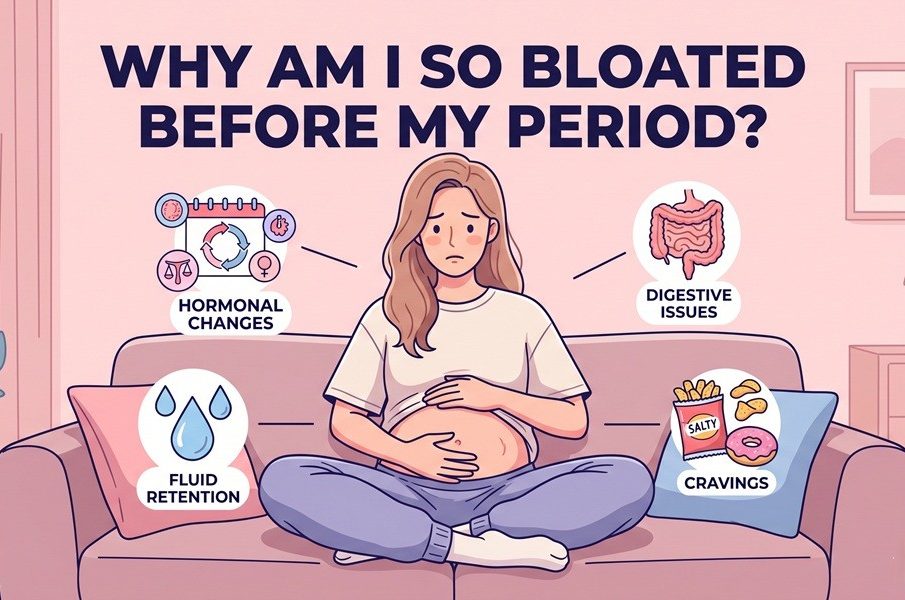
The root cause is hormones – specifically, the dramatic drop and rise of estrogen and progesterone in the days before your period.
Here’s how it plays out:
1. Progesterone Slows Your Gut
In the week or two before your period, progesterone levels peak. Progesterone has a calming effect on smooth muscle – including the muscles that line your intestines. This slows gut motility, meaning food and gas sit in your digestive tract longer than usual. The result is that heavy, bloated feeling with possible constipation.
Once your period begins and progesterone drops, things usually start moving again.
2. Estrogen Causes Water Retention
As progesterone drops, estrogen rises relative to it. High estrogen causes your body to retain water and salt – a condition called premenstrual water retention. Your cells literally swell with fluid, making your abdomen feel full and puffy.
Research shows that women retain the most water on the first day of their period, which is also when bloating tends to be worst before it improves.
3. Prostaglandins Trigger Cramping and Bowel Changes
In the days before and during your period, your uterus releases prostaglandins – hormone-like chemicals that cause uterine contractions. These same chemicals affect the bowel too, sometimes causing cramping, diarrhea, or constipation alongside the bloating.
4. It’s Not Your Uterus Swelling – It’s Your Intestines
This is a misconception many people have. The bloated feeling comes primarily from intestinal gas, sluggish bowel movement, and fluid retention in body tissues – not from the uterus growing or becoming inflamed.
When Does Pre-Period Bloating Start?
Most women begin to feel bloating 5 to 7 days before their period – though for some, it starts up to 10-14 days before (in the luteal phase after ovulation). It typically improves within the first 1-3 days after your period starts.
If bloating begins more than 2 weeks before your period or doesn’t go away after your period ends, it’s worth mentioning to your doctor.
How Much Weight Can You Gain From Period Bloating?
Research shows that during the menstrual cycle, a person may gain around 0.5 kg (roughly 1 pound) due to water retention. Anecdotally, some women report gaining up to 5 lbs during the heaviest bloating days. This is water weight – it disappears within the first few days of your period.
7 Ways to Reduce Bloating Before Your Period
|
Strategy |
Why It Works |
|---|---|
|
Cut back on salt |
Sodium causes the body to hold water – less salt = less puffiness |
|
Drink more water |
Counterintuitive but effective – flushing excess sodium out |
|
Take magnesium |
Studies show magnesium can reduce water retention and PMS symptoms |
|
Avoid carbonated drinks |
Carbon dioxide gas adds pressure to an already sluggish bowel |
|
Limit refined sugar |
Spikes insulin, which worsens fluid retention |
|
Light exercise |
Gets the bowel moving and reduces water retention |
|
Reduce alcohol |
Alcohol worsens water retention and gut inflammation |
Can Bloating Before Your Period Be a Sign of Pregnancy?
Yes – early pregnancy also causes bloating due to progesterone. If your period doesn’t arrive after the usual bloating phase, take a pregnancy test. Bloating alone is not a reliable indicator either way.
When Should You See a Doctor?
See your doctor if:
- Bloating is severely painful
- It doesn’t improve after your period ends
- You have bloating throughout the month, not just before your period
- You have unexplained weight gain, changes in bowel habits, or blood in your stool
Conditions like endometriosis, PCOS, IBS, and ovarian cysts can also cause severe cyclical bloating.
Key Takeaways
- Pre-period bloating is caused by hormonal fluctuations – mainly falling progesterone and rising estrogen
- Your intestines are the main source of the swelling, not your uterus
- It typically begins 5-14 days before your period and resolves in the first few days
- Salt reduction, hydration, magnesium, and light exercise are the most effective relief strategies
- Persistent or severe bloating warrants a medical check