

Low Histamine Food List: The Complete Practical Guide
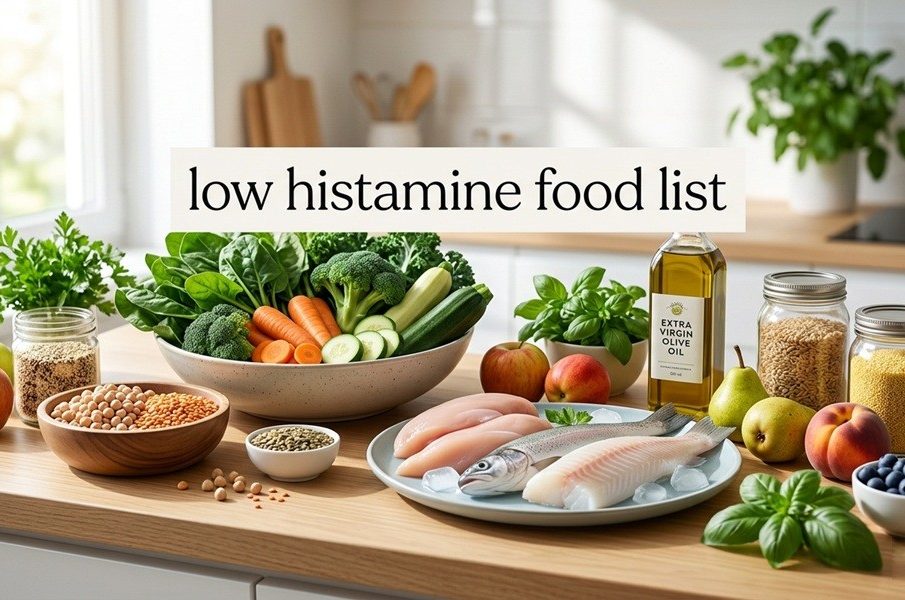
Histamine intolerance is a condition where the body accumulates more histamine than it can break down, leading to a wide range of uncomfortable symptoms. Diet is the primary management tool – but the food lists can be overwhelming and contradictory.
Here’s a clear, practical breakdown of what to eat, what to avoid, and how to approach a low histamine diet.
What Is Histamine Intolerance?
Histamine is a chemical naturally present in the body and in many foods. It plays roles in immune response, digestion, and neurological function. The body breaks histamine down primarily through an enzyme called DAO (diamine oxidase).
People with histamine intolerance have reduced DAO activity – meaning histamine builds up faster than it can be cleared. This triggers allergy-like symptoms:
- Bloating (present in up to 92% of histamine intolerance cases)
- Headaches and migraines
- Skin flushing, hives, itching
- Runny nose, sneezing
- Irregular heartbeat
- Fatigue
- Diarrhea or constipation
The Bucket Theory of Histamine
The most important concept to understand: it’s not any single food that causes symptoms – it’s total histamine load.
Think of your DAO capacity as a bucket. Histamine from food and your own body slowly fills the bucket. Symptoms appear when it overflows. This is why the same food might cause a reaction one day but not another – depending on how full your bucket already is.
✅ Low Histamine Foods: Safe to Eat
Fruits
- Apples, pears, mango, blueberries, melon, cherries, grapes, peaches, coconut
Vegetables
- Zucchini, carrots, sweet potato, broccoli (in moderation), cucumber, garlic (in small amounts), beetroot (fresh), iceberg lettuce, corn, peas, potatoes, sweet peppers (green/yellow; not red)
Protein
- Freshly cooked chicken or turkey (not leftovers)
- Freshly caught fish – immediately frozen after catch
- Fresh eggs (some people react; test individually)
Grains
- Rice, oats, quinoa, millet, corn flour, pure buckwheat
Dairy
- Fresh mozzarella, ricotta, cream cheese, mascarpone (not aged or fermented cheeses)
- Butter (generally well-tolerated)
Fats and Oils
- Olive oil, coconut oil, sunflower oil
Herbs (fresh and dried, but avoid old spices)
- Basil, parsley, oregano, rosemary, thyme, sage
Sweeteners
- Cane sugar, maple syrup, stevia, rice syrup
Beverages
- Water, herbal teas (chamomile, peppermint, rooibos), coconut milk, fresh-made rice milk
❌ High Histamine Foods to Avoid
The Biggest Offenders
|
Category |
Avoid |
|---|---|
|
Dairy |
Aged cheeses (cheddar, parmesan, brie, camembert), sour cream, yogurt |
|
Meat |
Canned, smoked, cured, or processed meats (salami, bacon, hot dogs) |
|
Fish |
Canned tuna, sardines, mackerel, smoked salmon, dried fish |
|
Fermented foods |
Sauerkraut, kimchi, miso, soy sauce, vinegar, kombucha, kefir |
|
Alcohol |
All alcohol – especially red wine, beer, champagne |
|
Vegetables |
Tomatoes, spinach, eggplant, avocado, pickled anything |
|
Fruits |
Citrus fruits (lemon, lime, orange, grapefruit), strawberries, banana, dried fruit |
|
Condiments |
Ketchup, mustard, hot sauce, most store-bought sauces |
|
Leftovers |
Any food that has been sitting – histamine accumulates rapidly |
Foods That Block DAO (Making Things Worse)
Some foods don’t contain much histamine but block the DAO enzyme from breaking it down – amplifying the effect of other foods:
Key Rules for Low-Histamine Eating
- Freshness is everything – histamine accumulates as food ages; cook fresh and eat immediately
- Freeze meat immediately – fresh chicken that sits in the fridge for 2 days can accumulate histamine
- Avoid canned and packaged foods – rely on fresh, whole foods
- Cook, don’t grill – grilling produces more histamine than steaming or poaching
- Don’t do this long-term without guidance – the low histamine diet is nutritionally restrictive and should be supervised by a registered dietitian
Key Takeaways
- Low histamine eating is about reducing total histamine load, not eliminating all histamine
- Fresh chicken, rice, oats, most fruits (except citrus), and low-FODMAP vegetables are your core safe foods
- Aged, fermented, canned, and smoked foods are the biggest triggers
- The goal is a 4-6 week elimination trial followed by systematic reintroduction to find your personal threshold